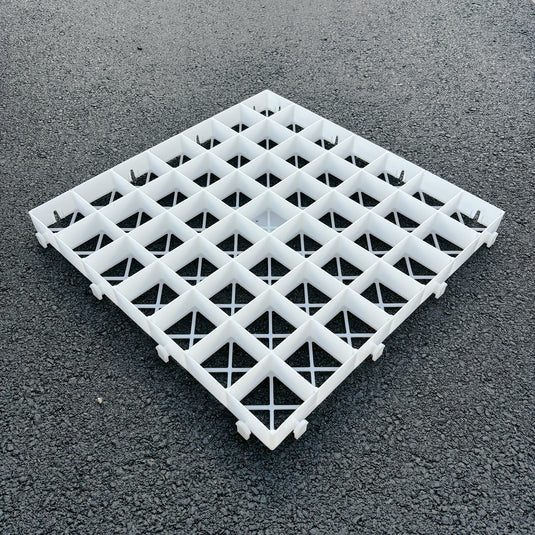
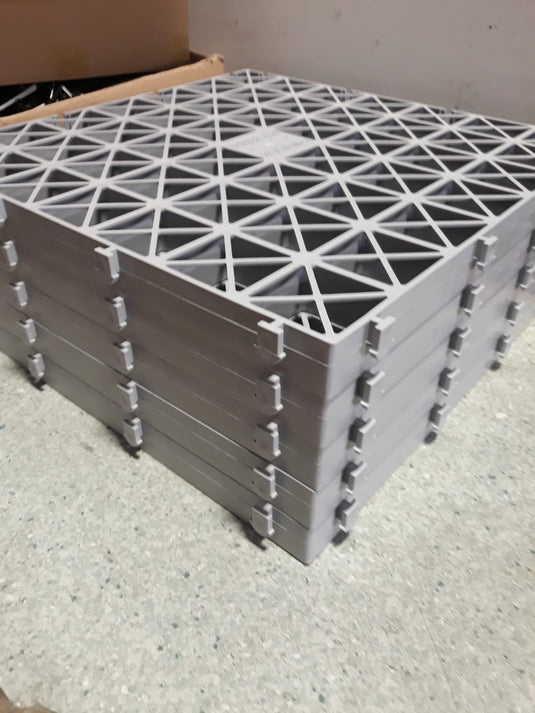
Kratka do żwiru IBRAN – wybór profesjonalistów.
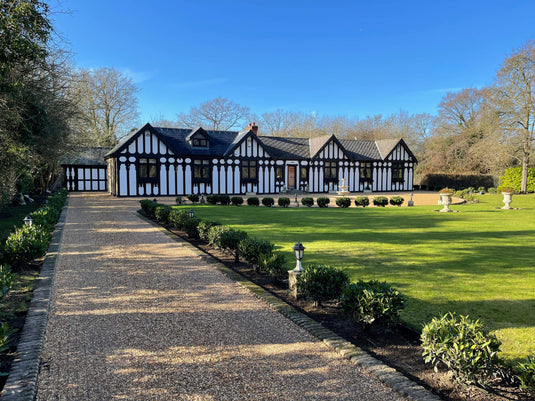
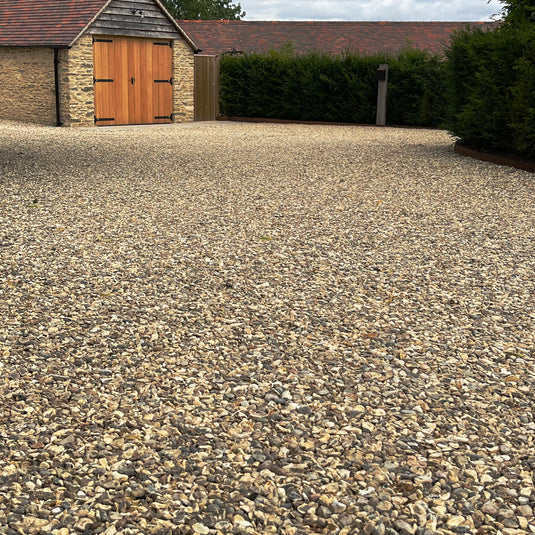
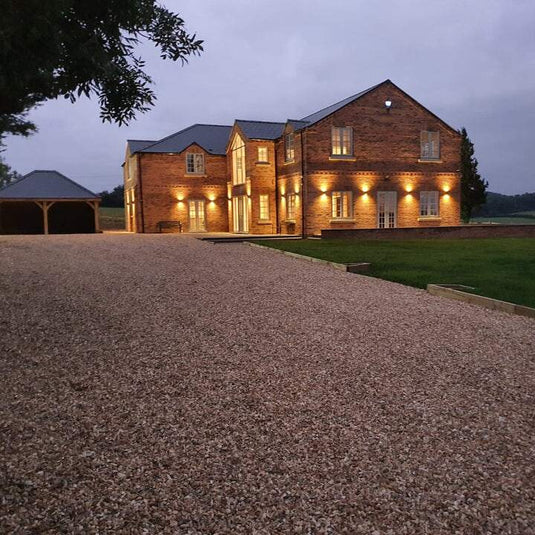
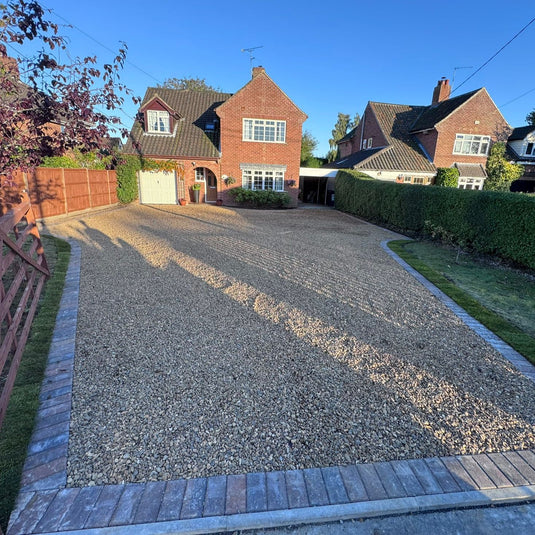
Zapewnij sobie wyjątkową nośność oraz szybki i łatwy montaż. Kratki żwirowe IBRAN®-X40 sprawdzają się we wszystkich zastosowaniach: podjazdy żwirowe, parkingi, drogi dojazdowe dla służb ratunkowych oraz inne utwardzone lub stabilizowane nawierzchnie żwirowe.
Uzyskaj estetyczną, trwałą nawierzchnię przejezdną dla każdego pojazdu. Produkujemy wyłącznie z przyjaznego środowisku 100% recyklingowanego tworzywa sztucznego (PP+HDPE), odpornego na wszelkie warunki atmosferyczne bez ryzyka kruchości.
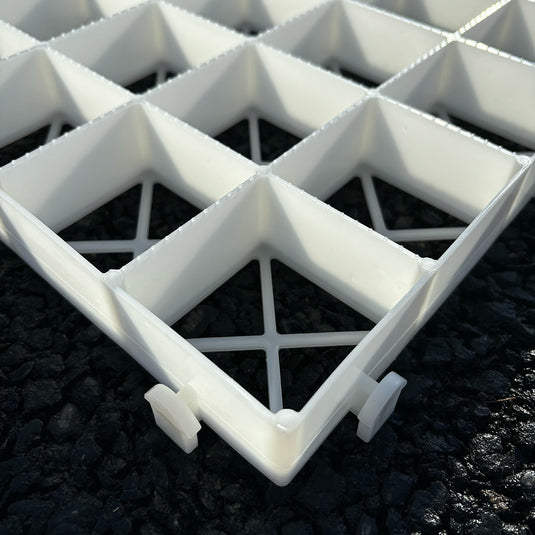
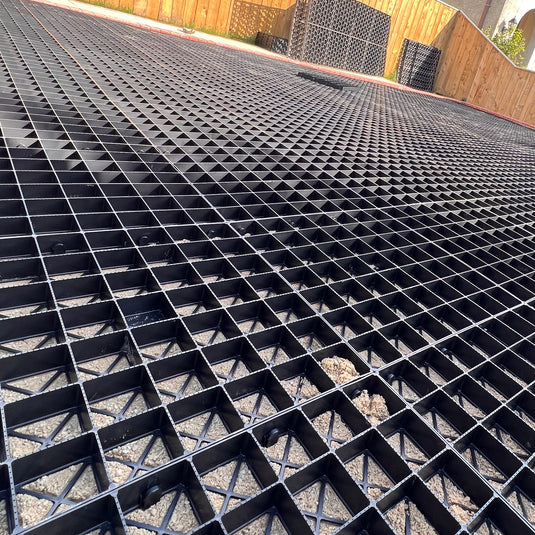
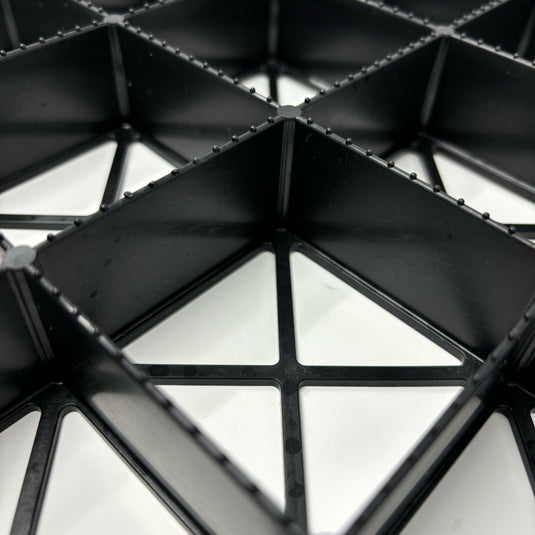
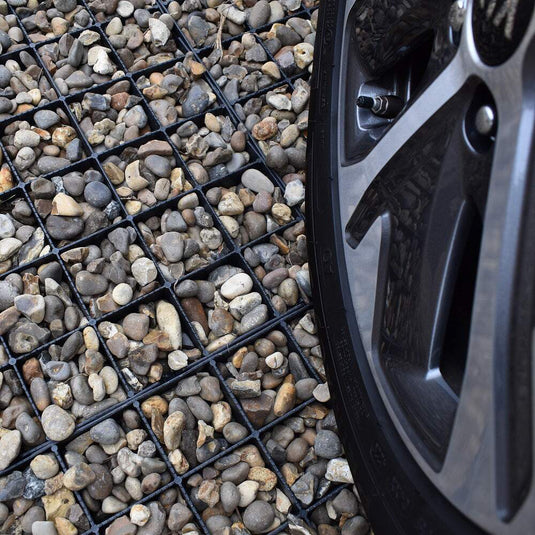
Ponad 100 000 zrealizowanych instalacji i ponad 10 lat ciągłego doskonalenia pozwoliło nam dopracować kratki do stabilizacji żwiru. W tym czasie wprowadziliśmy grube, żebrowane ścianki komórek o grubości 3,5 mm oraz nową, odlewaną kratownicę w kształcie litery X w podstawie, która zapobiega osiadaniu kruszywa i spina dolną część ścianek, eliminując ryzyko zawalenia się konstrukcji od podstawy.
W połączeniu z szybką w układaniu geowłókniną rolowaną, dobraną do warunków gruntowych, tworzy najskuteczniejszy w branży system zapobiegający migracji żwiru.
Efektem jest wyjątkowo skuteczny system siatek do zbrojenia żwiru – niezwykle trwały, a jednocześnie prosty w montażu. Wykonawcy na całym świecie określają je jako "najlepsze plastikowe kratki do żwiru, jakich kiedykolwiek używali".
Na parkingach żwirowych system przenosi obciążenia osiowe porównywalne z nawierzchniami związanymi, takimi jak beton czy asfalt (obciążenie osiowe 25 ton / 27,5 US ton). Kratki żwirowe IBRAN®-X40 poprawiają odprowadzanie wód opadowych ze stabilizowanej nawierzchni żwirowej, szybko infiltrując wodę do gruntu i ograniczając ryzyko podtopień powierzchniowych.
Wystarczająco duże (4 szt. na metr kwadratowy / 3,7 szt. na jard kwadratowy), by montaż był szybki i łatwy, a zarazem wystarczająco małe, by minimalizować odpady. Nasz system kratek do podjazdów żwirowych sprawia, że realizacja przepuszczalnych nawierzchni jest szybka i opłacalna – zarówno na prywatnych podjazdach, jak i w większych projektach komercyjnych. Prawidłowo zainstalowane kratki żwirowe IBRAN służą przez dziesięciolecia.
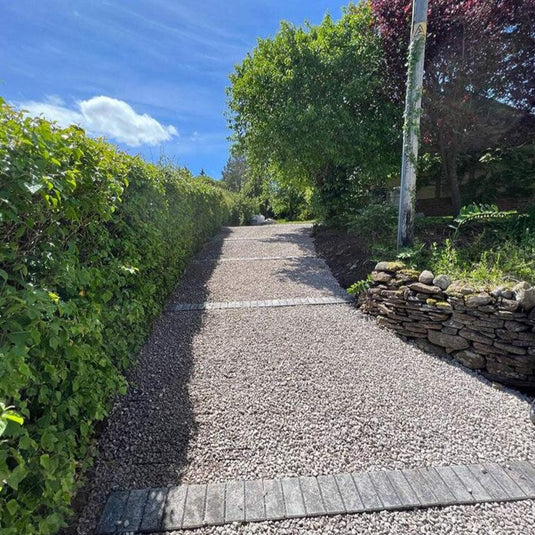
To idealne, ekologiczne rozwiązanie zapobiegające migracji żwiru, nawet na skarpach o nachyleniu do 25%.
- W pełni przepuszczalne: skuteczne rozwiązanie w zakresie zrównoważonego odprowadzania wód opadowych (zgodne z wymaganiami systemów retencji i infiltracji)
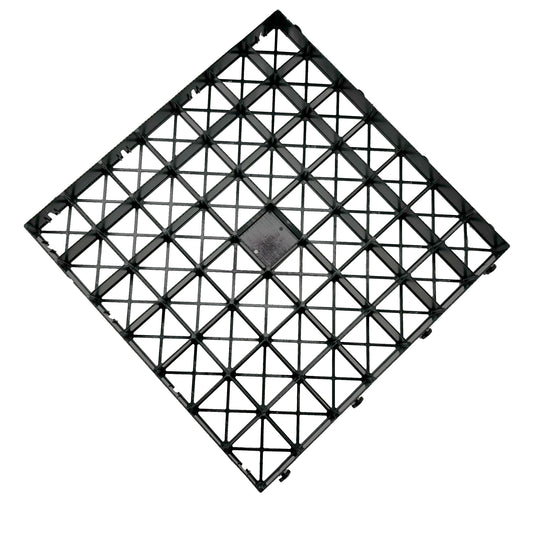
- Szybkie pokrycie dużych powierzchni (500 x 500 x 40mm / 20 x 20 x 1.6in)
- Odlewana kratownica X w podstawie: zatrzymuje kruszywo i domyka strukturę komórek pod obciążeniem
- Stabilizuje kruszywo łamane lub dekoracyjne o frakcji 5–35mm (1/4in – 1 3/8in)
- Szybki montaż na wcisk – kratki łączą się ze sobą bez narzędzi
- Przystosowane do samochodów osobowych, dostawczych, pojazdów ciężarowych i służb ratunkowych przy zastosowaniu odpowiedniej podbudowy
- Produkowane w zakładzie IBRAN w UE z wysokiej jakości materiałów w 100% z recyklingu
- Stabilne pod wpływem UV i mrozoodporne (-50ºC do +90ºC / -58ºF do +194ºF)
- Spełnia wymagania dostępności dla osób poruszających się na wózkach inwalidzkich
- Odpowiednie do szerokiego zakresu zastosowań – od lekkich do ciężkich, prywatnych i komercyjnych
- Długoterminowa gwarancja 25 lat (pod warunkiem udokumentowanego montażu – patrz instrukcja instalacji)
Pełna specyfikacja techniczna poniżej.
Kratki do żwiru Dane techniczne
| Wymiary: | 500mm x 500mm x 40mm |
| Pokrycie: | 4 kratki/m2 |
| Grubość żebrowanej ścianki: | 3.5mm |
| Kolor: | Czarny (inne kolory dostępne na zamówienie) |
| Wymiar komórki: | 68mm x 68mm |
| Masa: | 860g/kratka |
| Odporność na ściskanie: | 500 ton/m² (badanie PLT) |
| Nośność na oś: | 25 ton |
| Materiał: | 100% recycled PP/HDPE |
| Stabilność temperaturowa: | -50ºC do +90ºC |
| Zalecane wypełnienie: | Kruszywo łamane lub dekoracyjne 5–35mm |
| Właściwości środowiskowe: | Nietoksyczny, chemicznie obojętny i nadający się do ponownego użycia |
| Tolerancja nachylenia: | 25% / 15º |
| Zgodność: | Spełnia wymagania przepuszczalności nawierzchni i dostępności dla osób z niepełnosprawnościami |
| Bezpieczeństwo dla roślin: | Bezpieczny dla drzew |
Dokumenty techniczne
Szczegółowe dane techniczne i specyfikacje dostępne pod poniższymi linkami:
IBRAN-X 40mm Technical Data Sheet
Przewodnik projektowania podbudowy
Kratki do żwiru IBRAN-X stabilizują nawierzchnię żwirową na każdym placu budowy.
IBRAN-X to najbardziej wszechstronny, ciężkodutywy system kratek do żwiru z tworzywa sztucznego. Swobodny drenaż i wyjątkowo wysoka nośność (500 ton/m²) sprawiają, że sprawdzają się w każdym ekonomicznym podjeździe żwirowym, ścieżce, drodze dojazdowej oraz na parkingach komercyjnych i przemysłowych.
Wyjątkowa nośność – do 500 ton na metr kwadratowy.
Format 500mm x 500mm x 40mm pozwala na montaż nawet 360m2 na godzinę, przy minimalnych odpadach i minimalnym nakładzie pracy. Lekka konstrukcja kratki (860g na element, stabilizowana UV z modyfikatorem udarności) jest wzmocniona stabilizatorami UV i modyfikatorem udarności, co zapewnia wyjątkową trwałość. Co więcej, kratki są produkowane w sposób zrównoważony w zakładzie IBRAN na terenie UE, z wysokiej jakości, w 100% z recyklingu materiałów.
Przemyślana konstrukcja dostosowana do potrzeb branży.
Przez ostatnie 10 lat nieustannie udoskonalamy nasz system kratek do żwiru, dopracowując projekt na podstawie opinii wykonawców. W tym czasie wsparliśmy ponad 100 000 realizacji z IBRAN-X. Wykonawcy cenią IBRAN-X za:
- Szybki montaż – błyskawiczne pokrycie dużych powierzchni przy minimalnych odpadach z cięcia.
- System łączenia – zapewnia wytrzymałość pod ruchem pojazdów, nawet na skarpach.
- Kratownica w kształcie X – zapobiega ucieczce kruszywa pod spód i unoszeniu kratek.
- Modyfikator udarności – specjalna mieszanka tworzywa zawiera dodatek zapobiegający pękaniu.
Montaż na każdym placu pozwala tworzyć nawierzchnie dostępne dla wózków inwalidzkich, ciężkodutywe drogi dojazdowe, żwirowe podjazdy i ścieżki. Kratki parkingowe IBRAN sprawiają, że wykonanie idealnego podjazdu jest szybkie i proste. IBRAN-X można wypełnić dowolnym kruszywem łamanym lub gładkim o frakcji 5–35mm – kruszywo doskonale wbija się w komórki kratek.
Zrównoważona produkcja z tworzyw z recyklingu.
Przekraczając standardy branżowe i projektując z myślą o wykonawcach, IBRAN-X łączy wszystkie funkcje, o które prosili nasi klienci. Jako producent stawiający na zrównoważony rozwój, naszym celem jest tworzenie produktów spełniających najwyższe standardy – bo produkt, który nie spełnia swojej funkcji, nie jest produktem zrównoważonym.
Zgodnie z naszymi celami w zakresie zrównoważonego rozwoju, kratki mają optymalny format – montaż jest szybki, a ilość odpadów z cięcia minimalna. To oszczędność dla Twojego budżetu i dla środowiska.
Najwyższa jakość w atrakcyjnej cenie.
Jesteśmy jednym z nielicznych rzeczywistych producentów kratek do żwiru w Europie. Nie importujemy żadnych naszych produktów – każda kratka do stabilizacji żwiru jest wytwarzana we własnym zakładzie i wysyłana bezpośrednio z fabryki w ciągu 1 do 4 dni roboczych od pozytywnego przejścia kontroli jakości.
Eliminacja zbędnych ogniw pośrednich pozwala nam oferować kratki do żwiru najwyższej jakości w bardzo konkurencyjnej cenie.
Kratki parkingowe IBRAN – trwała jakość w każdym zastosowaniu.
Tysiące zrealizowanych projektów.
Moglibyśmy podać setki powodów, dla których warto wybrać IBRAN – ale opinie naszych klientów powiedzą więcej niż my kiedykolwiek moglibyśmy.
Ponad 10 lat doświadczenia i ponad 100 000 zrealizowanych projektów – jesteśmy pewni, że współpraca z nami spełni Twoje oczekiwania.
Nie musisz wierzyć nam na słowo. Przeczytaj, co mówią nasi klienci.
What is IBRAN-X?
IBRAN-X is a high-strength permeable paving grid system designed for gravel retention and ground reinforcement. Made from PP (polypropylene) and HDPE (high-density polyethylene), it creates stable, permeable surfaces for driveways, parking areas, and many other applications.
The unique cell design prevents gravel migration while allowing natural drainage.
Can you cut gravel grids?
Most plastic gravel grids can be cut to fit any shape or size of area, with the offcuts usually able to be recycled.
The larger the grid, the larger the offcuts can be. The smaller the grid, the more labour is involved in installing them - especially if they are interlocking grids. Our design sits in the sweet spot.
500mm square grids are considered the gold standard, and as such our grid is designed to this specification.
What are the benefits of using IBRAN-X?
IBRAN-X gravel grids offer multiple benefits:
- Exceptional strength (tested to 500 tonnes per square metre)
- 100% permeability for SuDS compliance
- Minimal maintenance requirements
- Rapid installation using our interlocking system
- UV stability to prevent degradation
- Eco-friendly construction using recycled materials
- Prevents gravel migration
- Eliminates rutting
- Creates wheelchair-friendly surfaces when properly installed
What vehicles can drive on IBRAN-X Gravel Grids?
IBRAN-X has been independently tested to withstand loads of up to 500 tonnes per square metre, making it suitable for everything from domestic vehicles to heavy goods vehicles.
This makes it ideal for:
- Residential driveways
- Commercial parking lots
- Emergency access routes
- Industrial applications
What kind of stone should be used with IBRAN-X?
For optimal performance, we recommend using 20mm angular gravel with IBRAN-X grids. However, the system can accommodate aggregates between 5mm and 35mm.
Angular gravel is preferred over rounded as it locks together better, creating a more stable surface.
For driveways specifically, 20mm angular gravel provides the best balance of stability and drainage while being less likely to get caught in tire treads.
How are IBRAN-X grids installed?
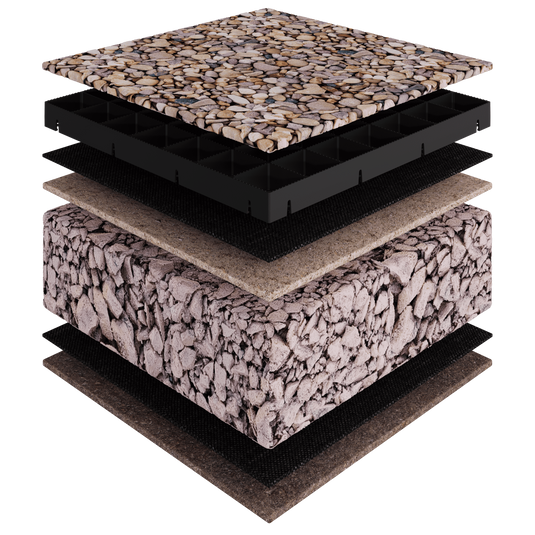
Installation follows these key steps:
- Excavate to the required depth (typically 150-300mm depending on application)
- Install a geotextile membrane to prevent upward migration of sub-base materials
- Add and compact Type 1 or Type 3 sub-base to the required depth
- Add a thin laying course of 10-20mm sharp sand or granite dust
- Lay IBRAN-X grids, connecting them using the interlocking system
- Fill with chosen aggregate
For detailed instructions, please consult our installation guide.
Is there a guarantee with IBRAN-X?
Yes - provided you can provide evidence of having followed our installation guide, then we offer a 25 year guarantee.
Is IBRAN-X Gravel Grids SuDS Compliant?
Our gravel grids are 100% permeable, making them one of the best Sustainable Urban Drainage Solutions.
Is IBRAN-X Wheelchair Friendly?
In the UK, there are no documents or set standards for approval of our system except for the government's own guidance, known as Part M.
To be part M compliant, the surfacing choice needs to demonstrably smooth enough to allow a wheelchair user to manoeuvre their wheelchair, whilst supporting their weight.
Using IBRAN gravel grids is the only way to make a gravel surface suitable wheelchair friendly.
This video demonstrates the ease of wheelchair use: demonstration video.
Is IBRAN ISO-9001 certified?
Yes, ISO-9001 is just one of the many certifications we are proud to carry as a manufacturer.
What are gravel stabilisation grids?
Gravel stabilisation grids are a type of ground reinforcement system made from PP (polypropylene) and HDPE (high-density polyethylene). They are used to create a stable, permeable, and aesthetically pleasing surface for a variety of applications, including driveways, walkways, and landscaping.
The grids are made up of a series of interlocking cells that hold the gravel in place, preventing it from shifting and moving underfoot.
What are the benefits of using gravel stabilisation grids?
There are many benefits to using gravel stabilisation grids, including:
- Stability: By preventing the gravel from spreading, they ensure a consistently stable and level surface
- Permeability: By allowing the passage of water, they reduce runoff, which reduces flooding in built-up areas by allowing for natural drainage
- Durability: The combination of PP and HDPE materials creates a robust system that is resistant to rot, decay, and pests
- Aesthetics: Gravel stabilisation grids can be used to create a variety of different patterns and designs
- Low maintenance: Once installed, gravel stabilisation grids require very little maintenance
Can I use gravel stabilisation grids on all types of ground?
Gravel stabilisation grids can be used on a variety of different ground types, including clay, sand, and gravel. However, it is crucial to ensure that the ground is properly prepared with a stable, compacted sub-base before installation. This foundation work is essential for the long-term performance of the system.
How long do gravel stabilisation grids last?
Gravel stabilisation grids made from PP and HDPE materials are extremely durable and can last for many years. However, the lifespan of the grid will depend on:
- The specific application
- The quality of installation and sub-base preparation
- The amount of traffic it receives
Do I need planning permission to install gravel stabilisation grids?
In most cases, you will not need planning permission to install gravel stabilisation grids. However, it is always best to check with your local planning authority to be sure.
How much do gravel stabilisation grids cost?
The cost of gravel stabilisation grids will vary depending on the size of the area you need to cover and the specific type of grid you choose. However, they are generally a cost-effective solution for creating a stable and durable gravel surface.
Additional Applications & Suggested Uses
Our versatile product can support a much wider range of applications.
Eco-friendly, sustainable grass and gravel paving and structural support solutions.
- Ground stability grids installed at ground level to prevent soil disruption from vehicle and foot traffic.
- Access roads and emergency service lanes (e.g., fire and ambulance routes)
- Driveway grids and gravel parking
- Grass or gravel car parks, including temporary and permanent overflow parking Reinforcement for residential driveways, lawns, and gravel parking
- Surface drainage solutions for stormwater management and flood control
- Safe water runoff solutions and French drains Stability for railway embankments
- Slope and embankment reinforcement
- Drainage and melioration ditches
- Use for horse paddocks, ménages, and arenas
- Buggy paths and disability access routes
- Golf course pathways and grass stabilisation
- School play areas and access routes
- Flooring for events and marquees
- Lawn protection for sloped gardens
What is the difference between a moulded mesh base and a heat-welded membrane?
A moulded mesh base is formed as part of the grid in a single moulding operation, so it is structurally integral to the cell walls. A heat-welded membrane is a separate sheet of fabric bonded to the underside of the grid after moulding.
The distinction matters for two reasons:
- Retention: a moulded mesh physically arrests downward migration of aggregate into the sub-base, and cannot delaminate or tear away, because it is the same piece of material as the grid.
- Structure: the mesh ties the base of every cell wall to its neighbours, resisting the tendency of cells to splay open under vertical load and under torsional loading from steering, braking and turning vehicles.
A bonded fabric contributes nothing to the structural performance of the grid. It is a filtration layer, not a reinforcement.
Does a heat-welded membrane stop gravel migrating downwards?
Only while it remains intact.
A thin non-woven fabric bonded to the underside of a grid will suppress weed growth and will initially hold back fines. The problem is where it sits: directly beneath the aggregate it is meant to retain.
Angular gravel is the aggregate specified for almost every stabilised gravel application, and angular gravel has sharp arrises. Under repeated point loading from vehicle traffic, those arrises work against a lightweight fabric until it is punctured. Once punctured, the membrane no longer performs the retention function and aggregate begins to migrate into the laying course and sub-base.
A moulded mesh base does not share this failure mode. It is rigid moulded polymer, not a fabric skin.
Does the mesh base do anything other than retain gravel?
Yes, and this is the part most specifiers overlook.
The cell walls of any gravel grid are, in effect, a honeycomb of thin vertical webs. Loaded vertically, and particularly loaded torsionally when a vehicle turns on the spot or brakes hard, those webs want to deflect outwards at their base. Once cells begin to splay, the grid loses its confining effect on the aggregate and the surface starts to rut and spread.
A moulded mesh base restrains the foot of every cell wall, holding the geometry closed and transferring load laterally across the panel rather than into individual webs.
Load performance and cell base design cannot be considered separately.
Do I still need a separate membrane if my grid has a mesh base?
We recommend using both. They are not doing the same job.
- The moulded mesh base retains aggregate and closes the cell structure, at surface level.
- A geotextile membrane laid at formation level, beneath the sub-base, prevents upward migration of subgrade fines into the granular layers and provides separation and, depending on grade, reinforcement.
Two different functions, at two different levels in the build-up. Combining a mesh-based grid with a correctly specified geotextile gives you retention at the surface and separation at formation.
Relying on a single bonded fabric to do both is a compromise driven by convenience rather than engineering.
Will a membrane-backed grid save me time on installation?
Marginally, and it is worth being honest about the scale of the saving.
Rolling out geotextile across a prepared formation is one of the quickest tasks in the entire installation. On a typical domestic driveway it is a matter of minutes.
Set that against the consequence of specifying the wrong separation layer, or of a bonded fabric failing in service. Excavating and relaying a failed driveway is measured in days and in thousands of pounds.
Choosing the membrane grade to suit the subgrade, the traffic and the drainage strategy is a decision worth making deliberately, at formation level, rather than having it made for you at the factory.
Why does IBRAN not bond a membrane to the underside of its grids?
Because it would substitute a consumable fabric for a structural feature.
Our grids are moulded with an integral mesh base that performs the retention function permanently and contributes to the load and torsional performance of the panel. Bonding a fabric on top of that would:
- Add cost
- Add a component with a shorter service life than the grid itself
- Remove the installer's ability to specify the right geotextile for the ground conditions they are actually dealing with
We would rather give you a grid that does not depend on a fabric, and let you choose the membrane the project needs.
Haili Branson
OnlineZaufali nam liderzy branży








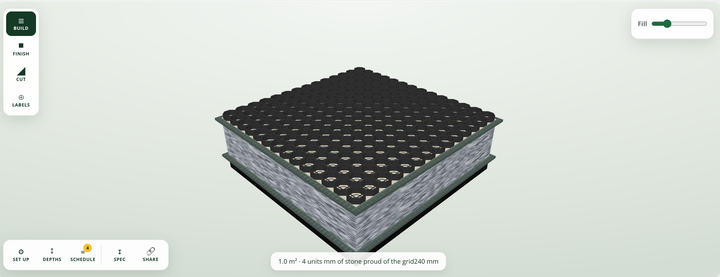
Opracuj swoją specyfikację
Określ powierzchnię, wybierz kratkę i wypełnienie, a zobaczysz gotową nawierzchnię. Ilości materiałów i pełna specyfikacja generują się automatycznie.
- Ilości i ciężary dla pełnego układu warstw
- Głębokość podbudowy według klasy obciążenia ruchem
- Dodaj kratki bezpośrednio do koszyka

Dlaczego kratki do żwiru IBRAN to najlepszy wybór dla profesjonalistów
Kiedy twoje nazwisko jest na budowie, każdy użyty materiał świadczy o twoich standardach. Dlatego wykonawcy w całej Europie wybierają IBRAN — nasze kratki do żwiru są zaprojektowane z myślą o warunkach rzeczywistych, a nie tylko o wyglądzie w katalogu.
W odróżnieniu od przewymiarowanych kratek z podklejoną geowłókniną, które uginają się pod obciążeniem i generują straty materiału przez nieporęczne odcięcia i słabe złącza, IBRAN oferuje rozwiązanie gotowe do pracy — szybkie, wytrzymałe i bez kompromisów:
- Kompaktowy, modułowy format oznacza sprawniejszy transport, łatwiejsze cięcie i mniej odpadów na placu budowy. Koniec z dźwiganiem paneli 2 m i wyrzucaniem odciętych pasków — efektywne krycie powierzchni bez zbędnego plastiku.
- Siateczkowe dno tacy blokuje żwir w miejscu, zapobiegając migracji kruszywa pod kratkę i eliminując jego wybijanie ku górze — czego geowłóknina nie jest w stanie zapewnić po przebiciu przez kruszywo lub nierównomiernym osiadaniu.
- Modyfikowane udarowo, w 100% z recyklingu polipropylen nie pęka, nie łamie się i nie traci właściwości przy mrozach — znacznie trwalszy niż kruche komórki plastra miodu z cienkimi ściankami i niestrukturalnymi włókninami.
- Montaż wciskany z góry dla szybkiej instalacji — układaj setki metrów kwadratowych na godzinę, samodzielnie lub w ekipie, z natychmiastowym blokowaniem i minimalnym przygotowaniem podłoża.
- Pełna kompatybilność z obrzeżami i akcesoriami IBRAN — od przygotowania podłoża do wykończenia bez przestojów, prowizorycznych rozwiązań ani niedopasowanych systemów.
Kratki IBRAN nie są przeładowane zbędnymi funkcjami — są zaprojektowane tak, żebyś pracował szybciej, kończył staranniej i rzadziej wracał na reklamacje. A ponieważ nie ma tu żadnej delikatnej geowłókniny przyklejonej do spodu, to co ułożysz — zostaje na miejscu.
Ułóż raz. Bez ugięć, bez problemów, bez usterek.
Rozwiązania przyjazne środowisku
Kratki do żwiru IBRAN łączą prostotę montażu i wszechstronność zastosowań z wymiernymi korzyściami dla środowiska. Produkowane w zakładach IBRAN w UE wyłącznie z materiałów z odzysku (100% recyklowanego tworzywa sztucznego), trwale wiążą odpady polimerowe i minimalizują ślad węglowy zarówno w produkcji, jak i transporcie.
Kilka kolejnych zalet:
Kontrola erozji: Stabilizując podłoże gruntowe, kratki do żwiru skutecznie ograniczają erozję wywołaną intensywnymi opadami, chroniąc otaczającą roślinność i ukształtowanie terenu.
Gospodarka wodami opadowymi: Kratki do żwiru umożliwiają swobodną infiltrację wody deszczowej przez powierzchnię, zmniejszając ryzyko podtopień i erozji.
Redukcja nagrzewania powierzchni: W przeciwieństwie do tradycyjnych nawierzchni utwardzonych, kratki do żwiru obniżają temperaturę powierzchni, tworząc chłodniejsze mikrośrodowisko.



Łatwy montaż
Kratki do żwiru IBRAN są wyjątkowo proste w układaniu. Perforowane elementy łączą się ze sobą na zatrzask i utrzymują kruszywo o frakcji 10–30 mm. Układanie możliwe na każdej równej powierzchni, nawet przy spadku do 25%.
- Kratki układać na zagęszczonej podbudowie z kruszywa łamanego (np. kruszywo stabilizowane mechanicznie klasy C50/30 lub równoważne) bądź na innej dobrze zagęszczonej, równej powierzchni.
- Podbudowę wyrównać warstwą podsypki z piasku ostrokrawędzistego, przykrytej przepuszczalną geowłókniną.
- Kratki zablokować ze sobą i wypełnić kruszywem luzem.
Takie rozwiązanie zapewnia stabilną, odporną na koleinowanie nawierzchnię przejezdną.
Kratki do żwiru IBRAN z recyklowanego tworzywa sztucznego zaprojektowane są na ponad 25 lat użytkowania przy minimalnych wymaganiach konserwacyjnych.