Grass vs. Gravel Grids | Choosing the Right Solution | IBRAN

Here are some regular questions we get asked about IBRADRIVE Retention Grids from our customers.
What is the depth of the grid?
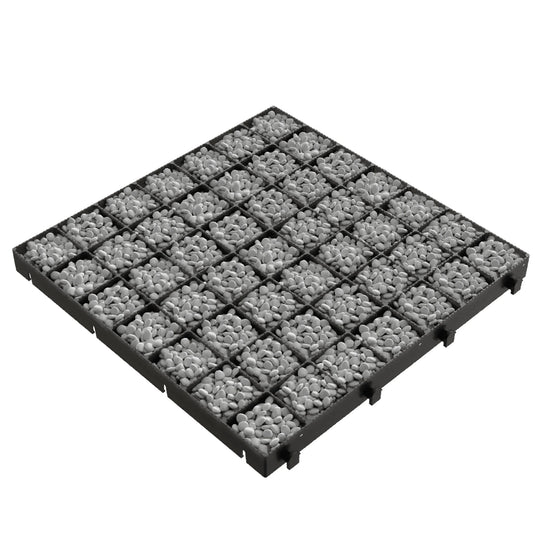
The actual depth is 40mm (4cm). It features pre-molded anti-slip nodules on the upper walls to maintain tyre traction in icy or wet conditions. Keep in mind that this 40mm depth represents only the top, confined surface layer of your driveway—not your structural foundation.
How much gravel is needed to hide the grids?
To fully submerge and conceal the cell walls, we recommend 30kg of 10mm or 20mm angular gravel per grid (providing roughly 10mm of loose overfill). If you prefer the grid walls to sit flush with the surface to minimise gravel shifting, use 20kg of gravel per grid. Always use angular, crushed stone rather than rounded pea shingle; angular stones wedge together inside the cells, creating a stable, interlocked mass.
Is there a difference between the grass and gravel grids?
The plastic tile itself is identical. However, the engineering profile underneath changes depending on your choice of infill:
- For Gravel: The sub-base requires a standard compacted MOT Type 1 or Type 3 aggregate layer beneath the grid.
- For Grass: You must use an ultra-permeable, open-graded rootzone soil mix within the cells, laid over a specialized sand/soil bedding layer. This ensures the grass roots can penetrate downward without hitting compacted stone, preventing the lawn from drying out and dying under tyre pressure.
Can they take the weight of forklift trucks or large lorries?
Yes, but only if you build the correct foundation underneath them.
Under perfect laboratory crush tests, an infilled square metre of our grid can withstand vertical compression loads of up to 500 tonnes before deformation.
Under perfect laboratory crush tests, an infilled square metre of our grid can withstand vertical compression loads of up to 500 tonnes before deformation.
However, in the real world, the plastic does not carry the weight—your sub-base and stone infill do. The grid simply acts as a flexible containment wall to stop the stone from scattering sideways under heavy tyres. For heavy or commercial vehicles like forklifts or articulated lorries, you must install a heavily compacted 150mm to 300mm engineering sub-base (such as MOT Type 1) beneath the grids to distribute the load and prevent ruts from forming.
Do you need any additional parts to fit the grids together?
No. The grids are manufactured with interlocking connection clips molded directly onto all four sides. This allows you to lock large sections together into a singular, floating matrix in a matter of minutes. This interconnected structure ensures that when a tyre drives onto one cell, the horizontal force is successfully shared across the surrounding tiles.
What is the width and height of a pallet of grids?
One fully stacked, space-saving transit pallet measures 1.2m x 1m x 2.2m.